Why Leeds, Why Now? An MBA Reinvents Itself In A City On The Rise
Author: Kritsty Bleizeffer, Rankings Editor at Poets&Quants
In Northern England, Leeds is a city ascending.
Already one of the country’s largest regional economies, Leeds is home to more than 800,000 people and a £36 billion economy that is growing faster than the UK overall. The city council’s Leeds Economic Vision calls for another £20 billion in growth over the next decade, with the potential to create 100,000 jobs in sectors including finance, health and technology.
Outside the office, Leeds is home to beloved sport teams like Leeds United and Yorkshire cricket. Its bustling city center packs restaurants, arts, music and shopping within a 10-minute walk of the University of Leeds campus. The Yorkshire Dales and other national parks are close enough for an easy weekend getaway.
Against that backdrop is a business school rethinking how to meet the city’s northern ambition.
Rather than wait for disruption to force change, leaders of the Leeds MBA have spent the last three years reshaping the MBA around practical experience. They’ve moved away from a traditional dissertation, added more live business challenges, expanded career support, and opened a dedicated MBA space designed for collaboration and community.
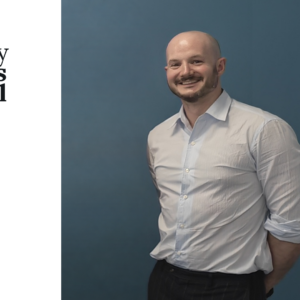
“One of the main KPIs we have on the program is that the outgoing students are always envious of the incoming students,” says Richard Hodgett, MBA Director.
“And that has been the case since we started. So as long as we keep doing that, we know we’re doing things right.”
AN MBA BUILT TO KEEP MOVING
Hodgett, whose background was in engineering and innovation, came to Leeds University Business School a decade ago to build a master’s degree in business analytics and decision sciences. He was appointed MBA director in 2023.
Since then, he and his leadership team – including Programme Manager Milly Metcalfe and Programme Officer Andrew Holden – have deliberately shifted the Leeds MBA away from a more research-oriented model and toward practical, real-world application.
Since, much like its home city, the program has been rising in both rankings and attention. It climbed from the 111-120 band in the 2024 QS Global MBA Rankings to 69th in 2027. The program ranks ninth in the UK and 29th in Europe. It also ranked 37th in the Financial Times European MBA Ranking, helping propel Leeds University Business School into the FT ranking for the first time at No. 89 in 2025.
“”In the first couple of years, we revamped the curriculum. We took out the dissertation. We moved away from a research orientated program to being more of a practical focused program,” says Hodgett, a Poets&Quants 40-Under-40 Best MBA Professor from 2025.
The curriculum is organized around four broad themes: data and digital technology, innovation and creativity, real-world application, and responsible leadership. It also built a core set of MBA-only modules designed to connect the fundamentals for senior-level decision-making. There’s one specifically on analytical thinking and data management, Hodgett’s academic specialty, and another on creativity, design thinking and innovation.
It’s not designed to turn MBAs into data scientists or software engineers, but to make sure MBAs understand enough about technology to lead organizations increasingly shaped by it. That now extends to agentic AI, programming, databases, analytical decision-making and even how executives can spot misleading statistics and visualizations.
Hodgett recalls attending an MBA focused event about 18 months ago when a room full of MBA academics and directors was asked who was actually teaching AI. His was the only hand that went up.
“We’re doing a lot with AI and data because that’s the way the world is moving. We’re preparing students to manage agentic AI as well as people, and we have workshops specifically focused on that,” he says.
“I think that does distinguish us. We try to cover the most up-to-date subjects. Our curriculum is constantly evolving, so students are learning cutting-edge material.”
Technology and analytics are woven throughout the Leeds MBA. Students still learn the fundamentals of finance, strategy, operations, markets and people, but through a data-rich, AI lens. In other words, what does leadership look like when managers are increasingly overseeing AI agents as well as people.
“Other programs might not cover how to identify misleading information. We look at how statistics or visualizations can be used to mislead, which I think will be incredibly useful for our students when they’re sitting in boardrooms in the future,” Hodgett says.
3 SEMESTERS, 3 LIVE CHALLENGES
The Leeds MBA is a full-time, one-year program built around a largely compulsory core. Over three semesters, students combine management fundamentals with applied work in data, innovation, leadership and real-world problem solving.
One of the clearest signs of the MBA’s shift toward applied learning is the addition of a third live business challenge, giving Leeds students one in each semester. Challenges are designed with real organizations such as NHS Foundation Trust, PwC, Consulting, Pfizer Health Solutions, Deloitte, and others.
* New Venture Challenge: As part of the Strategic and Entrepreneurial Management module, MBAs work in teams to develop a new product or service for a startup or established company. Designed to test creativity, teamwork and entrepreneurial thinking while giving students hands-on experience.
* Consulting Challenge: In the Leading in Practice module, MBAs work with small and midsize businesses, social enterprises or nonprofits to diagnose a real organizational challenge and provide consulting support. They engage directly with the client, recommend solutions and build practical leadership, problem-solving and advisory skills.
* The Innovation Challenge: In the Creative and Innovative Thinking module, students get roughly two weeks to take a real problem from an outside organization, develop a product or service to prototype stage, and pitch their solution back to company representatives and angel investors.
Students who want to take an idea further can tap SPARK, the university’s startup incubator, for mentoring, training, workspace and financial support.
For this year’s projects, First Direct challenged students to think about customer trust in AI while Marks & Spencer asked students to consider how it could better reach consumers under 35. One team went on to present its work at First Direct headquarters.
Beyond giving students real-world experience, the challenges show employers what Leeds MBA students can actually do, says Milly Metcalfe, programme manager.
“Having industry in those live business challenges, and seeing the kind of results and what these students are capable of, I think is a really big value to our MBA,” she says.
THE WORLD AS A CLASSROOM
Leeds has also expanded its international component, adding a second study trip so that every MBA participates in at least one. Students vote on the destination for the principal trip, while the second is selected in part around markets with strong career opportunities. Trips are designed around company visits, industry exposure and consulting projects with organizations in the host city.
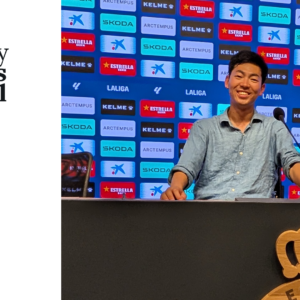
In August, MBAs spent a week in Barcelona where they visited Barcelona Tech City, GFT Technologies, Siemens, and the Barcelona Supercomputing Center. They studied sports analytics with football powerhouse La Liga and international trade at the Port of Barcelona.
On an earlier trip to Gothenburg, Sweden, MBAs studied trade, tariffs and world politics with former EU Trade Commissioner Cecilia Malmström, examined innovation and AI, and visited organizations including White Arkitekter, Liseberg, Sail Racing, SKF and Volvo.
The aim is to make internationalization applied rather than observational, Metcalfe says.
“The companies that we’ve worked with over there — it’s led to job offers for some students,” she says.
“Some of the solutions that they’re coming up with already are incredibly impressive, and I think creates a lot of value to these companies that we’re partnering with.”
WHY LEEDS? WHY NOW?
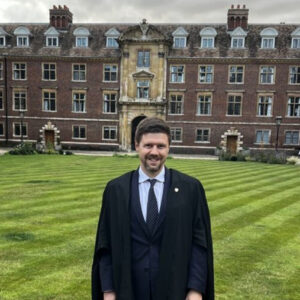
Before joining Leeds University Business School in 2025, Metcalfe worked at a top-performing business school in London. But she was drawn back north by what she saw happening in Leeds — and by the belief that students shouldn’t have to go to London for a world-class business education.
Leeds is a major financial center with a growing digital sector and a deep pool of young, educated talent. Hodgett estimates about 100,000 of the metro area’s roughly 900,000 residents are students. London is about two hours away by train, Manchester less than an hour and Edinburgh under three.
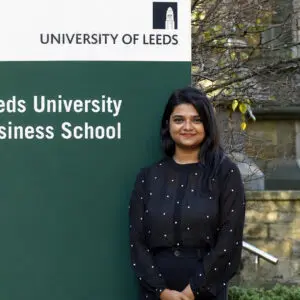
“There’s a real community feel to Leeds” says Metcalfe, who grew up in Yorkshire. “We have such a vibrant international population both in the programme and at Leeds University. I think that sense of community is why a lot of people come to feel at home here. They feel welcomed, comfortable, and a part of something.”
The Leeds MBA cohort is highly international. Of the 47 students in the Class of 2026, just two are from the UK. Students come from North and South America, Asia, the Middle East and India. They bring an average of about nine years of work experience, with an average age around 32. Doctors, veterinarians, and engineers study alongside consultants, entrepreneurs and corporate professionals.
“I think the cohort size and diversity that we have in comparison to maybe a lot of other schools is pretty much perfect,” Metcalfe says. “You’re not just a number in the room.”
THE ROI QUESTION
Over the past few years, Leeds has made several other changes to its evolving MBA. It created a new MBA Advisory Board chaired by Rakesh Sinha, a distinguished international executive and Leeds alumnus, alongside senior executives from WSP, AlixPartners and Goldman Sachs.
It extended individual careers coaching from one year after graduation to three. It developed an internal talent platform where students create profiles that can be shared with selected recruiters. And, it is hiring a careers professional dedicated specifically to the MBA and plans to launch a new mentorship program.
It also expanded its Masterclass Speaker Series and Leaders in Residence initiative. A recent masterclass took students to Wentworth Woodhouse in South Yorkshire to study how a historic estate can operate as a sustainable enterprise.
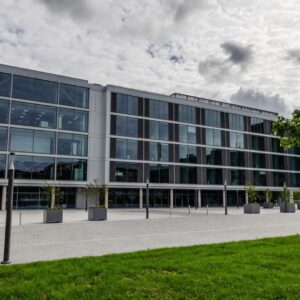
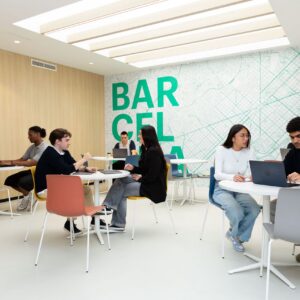
Finally, it recently opened a dedicated MBA lounge with meeting rooms, soundproof work booths, lockers, a kitchen and flexible gathering space. It has already hosted guest speakers, a sales challenge and student preparation for capstone presentations.
“When we first got our keys to access it, I was actually blown away,” Hodgett says. “There’s a kitchen , there’s a lounge. There’s lots of independent working booths and meeting rooms that you can book and a huge collaborative area in the middle that we’ve used for a couple of events already.”
All of this comes at a complicated moment for the MBA. Geopolitics is making international mobility less predictable, while AI is reshaping the professional, managerial and leadership roles many MBAs once targeted. Students are scrutinizing tuition, career outcomes and, increasingly, return on investment.
For Leeds, that means keeping the program relevant while maintaining a price point far below many U.S. MBAs. Tuition is £41,200, and the school advertises up to £500,000 in MBA Excellence Scholarships for 2027 entry.
What students get in return, particularly in a hands-on programme like Leeds, is access — to current tools and ideas, to employers, and to real business problems.
For all the changes, the goal for the Leeds MBA is still the same: To produce responsible leaders who can work across cultures, understand emerging technology and make decisions in messy, real-world settings.
“On average, our cohort has nine years work experience. They’re in a full-time MBA program, so they’ve all stepped away from their careers to come here,” Hodgett says.
“And that’s one of the reasons I love working with the MBAs. They’re real risk takers. They’re really, really curious and really, really ambitious. And so are we.”