Will An MBA Improve Your Career? Bath Graduates On ROI, Confidence And Career Growth
Author: University of Bath

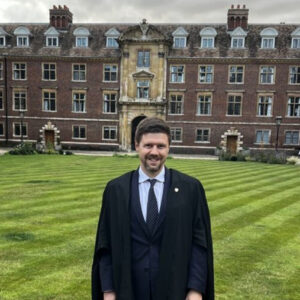
For Brant, the Bath MBA opened “a completely new stage”, helping him move from investment management in China into a global career at Deloitte in the UK.
Preethi gives a more cautious answer. “Ask me again in three years,” she says when asked whether the MBA was worth the investment. She is now a Senior Commercial Consultant at NHS Shared Business Services, working in the sector and role she came to Bath to pursue, but she is careful about judging the financial return too quickly. Some benefits are already visible: greater clarity and confidence, sharper communication and a network that is still opening doors.
For Suri, the biggest return was not a promotion or a new job, but the way the MBA changed how she leads. It gave her greater confidence, fresh perspective and stronger leadership capability in her role as Head of Supply & Procurement at NGC Energy in Malaysia.
Together, their stories show that the value of an MBA can’t be measured by salary alone. Salary matters, especially if you’re making a major financial commitment. But when choosing an MBA, value may also come through clearer career direction, opportunities to build an international career, greater confidence as a leader and stronger decision-making about your future.
THE POINT WHEN SOMETHING NEEDED TO CHANGE
Each came to Bath at a different career moment.
Before the MBA, Suri had spent nearly 20 years in the oil and gas industry in Malaysia. She was already part of the management team at NGC Energy, one of the country’s largest liquefied petroleum gas retailers. Reporting directly to the CEO, she led the company’s supply chain, procurement and business development.
During the pandemic, she began to reflect on what came next. Her roles were becoming more senior, but the options ahead felt narrower, not broader. She wanted to learn new skills, meet new people and understand what else might be possible.
“I became aware of what felt like a narrowing set of career options,” she says, “and I realised I needed to act on it.”
Before the MBA, Brant had spent nearly six years at HSBC China. He worked as an investment manager across financial markets, investments and portfolio management. From the outside, it looked like a solid career path. But over time, he began to feel a bottleneck.
“It was becoming difficult to move further on the career ladder,” he says.
For Brant, the MBA was a way to step back, broaden his professional outlook and open new possibilities for the next stage of his career.
Preethi had built a varied career in equity research, entrepreneurship, business development and pharmaceutical distribution across Southeast Asia. But while working in Cambodia, she began to feel limited by the size of the market.
She wanted to stay in healthcare while gaining an international qualification, a wider professional network and a clearer route into the kind of role she wanted next.
“If I’m going to continue to work outside India,” she says, “then it’s good to have an international degree that will help me expand my network and give me more opportunities.”
WHAT ACTUALLY CHANGED
The changes they describe are specific: practical shifts in how they work, think and make decisions.
For Brant, the MBA helped him understand his strengths in a new environment.
Before Bath, he saw himself as having strong technical skills. Mathematics, finance and analytical thinking had always been his focus. But through presentations, group work and class discussions, he realised he was also a confident communicator who could present ideas clearly.
“I thought I was very good at mathematics,” he says. “But through all of those collaborations in Bath, I found that I’m really good at presentation as well.”
It also changed how he approaches decisions.
At that point, Brant often started with what he believed was the best solution. Through group work, consulting modules and working with real clients, he learned to think differently. Now, he starts with the people, resources and constraints in front of him.

“I used to start from the best solution,” he says. “But now I start from what we’ve got and what we can do.”
For Suri, the shift was about leadership.
Studying in a highly international cohort changed the way she thought about communication, culture and collaboration. She says she had to “learn to unlearn” by adapting how she communicated, how messages were understood and what leadership looked like in different contexts. Over time, she became more adaptable and self-aware.
“I learned when to step forward, when to step back, and how to create space for others to contribute,” she says.
That mindset shift has stayed with her.
For Preethi, the MBA did not create confidence from scratch. She was already confident, experienced and used to asking questions. What changed was how she structured and communicated what she knew.
With 13 years of experience behind her, she realised she had already been using many business tools in practice. The MBA gave her the frameworks and language to present that thinking with more impact.
“My presentations became more clear, concise and to the point,” she says.
For experienced professionals, that can be a valuable return. If you are coming to an MBA with years of experience, part of the value may be learning how to structure, explain and evidence what you already know. The MBA helped Preethi present her experience more clearly and show employers the value of what she could bring.
CAREER MOBILITY IN PRACTICE
Career mobility did not look the same for each of them, and that is the point.
For Preethi, the line from MBA project to career outcome is clear.
She knew she wanted to work in healthcare, so she used the Bath MBA to build evidence in that sector. With classmates who shared her interest, she sourced a live project with NHS BSW Integrated Care Board through the alumni network.
That project gave her UK healthcare experience she could point to when applying for roles after the MBA. When she joined NHS Shared Business Services, she was able to demonstrate relevant sector knowledge, consulting experience and a clearer understanding of the UK healthcare context.
Brant’s career mobility looks different. It was not one single leap, but a series of deliberate steps.
After graduating in 2021, he joined Deloitte in the UK. His first role was in audit, where he built a strong professional foundation and qualified as a chartered accountant.
He then moved into risk management consulting, combining his earlier experience with the broader skills he developed during the MBA.
Today, Brant leads a team that helps global clients strengthen their risk control frameworks and meet international listing standards. It is the kind of fast-paced, global environment he hoped to be part of when he first decided to pursue an MBA.
Suri’s path was different again. She received a UK consultancy offer after the MBA, but chose to return to Malaysia after careful discussion with her family.
That decision did not make the MBA less valuable. It helped her return with greater confidence, broader business knowledge and a clearer sense of where she wanted to grow.
Suri is now Head of Supply & Procurement at NGC Energy. Alongside her work in supply chain, procurement and business development, she also leads ESG and sustainability reporting for Malaysia, consolidating data and reporting to the company’s headquarters in Oman.
For Suri, the MBA did not mean leaving her sector behind. It helped her see more value in the expertise she already had.
THE NUMBERS MATTER, BUT THEY ARE NOT THE WHOLE STORY
The human stories matter, but measurable outcomes still have a role when you are comparing MBA programmes.
In the Financial Times Global MBA Ranking 2026, the Bath MBA was ranked in the global Top 100. Bath MBA graduates achieved an average salary of US$101,976, with 70% employed within three months of completing the programme. Bath was also ranked Top 10 in Europe for Careers Service and Top 35 globally for International Mobility.
Bath MBA alumni also rated the programme 80% for helping them achieve the goals that motivated them to undertake an MBA.
These figures can help you compare MBA programmes and assess employability, career support, international mobility and whether alumni felt the MBA helped them achieve their goals.

WHAT RETURN LOOKS LIKE BEYOND SALARY
Salary matters. If you are considering an MBA, it has to. An MBA is a major financial commitment, and it is reasonable to ask what you will get back.
But for these alumni, the most immediate returns are not only financial.
For Suri, the MBA return is confidence, perspective and leadership capability.
“If I had to define my return on investment, it wouldn’t be financial, although that’s a bonus,” she says. “It’s confidence. Perspective. Leadership capability. Those are things that will stay with me.”
Brant sees his return as a broader career horizon.
“For me, the return on investment from the MBA is simple,” he says. “It opened a completely new stage in my life.”
The MBA expanded his professional skills, gave him new opportunities and created a wider horizon for his career. It also gave him the confidence to keep developing.
“I never stop,” he says. “After the MBA, after the ACA, I’m still moving forward.”
Preethi is more cautious, and that honesty is useful. She does not want to suggest that the financial return happens immediately for everyone.
“The financial return on an MBA is not always immediate and the timeline for success looks different for everyone,” she says.
But she can already see returns in other areas. The MBA gave her greater clarity about where she wanted to go and how to get there. It gave her more confidence in her abilities and a stronger way of communicating. It also expanded her network in ways that are still opening doors.
SO, WILL AN MBA IMPROVE YOUR CAREER?
There is no single answer to the MBA return on investment question.
Your return may be a new role, a salary increase or a move into a new country. It may also be confidence, leadership capability, strategic perspective or a clearer sense of what you want next.
The most useful question is not only, “Will the MBA pay off?”
It is also “What kind of return are you looking for?”
Are you trying to move into a new market? Change sector? Build international experience? Strengthen your leadership? Prove your value to future employers? Step back from your current career path and decide what comes next?
The Bath MBA does not give every person the same return. You will arrive with your own experience, goals and ambitions. What it can give you is the space, structure, network and practical experience to work out what your next step should be and move towards it with greater confidence.
The return comes from how you use it.
EXPLORE WHAT AN MBA COULD CHANGE FOR YOU
The return on an MBA will not look the same for everyone. It may mean moving into a new sector, progressing more quickly, building an international career or developing the confidence to take on greater responsibility.
The most useful place to start is with the outcome you want to work towards. Explore Bath MBA career outcomes and support, or book a one-to-one conversation to discuss how the programme could fit your career plans.