Where STEMB Meets Finance: 2 MBA Journeys At Imperial Business School
Author: Pola Lem, Executive Editor at Poets&Quants
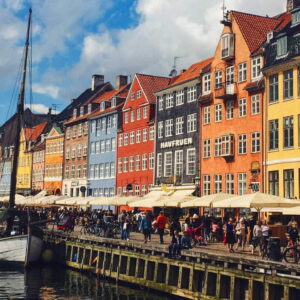
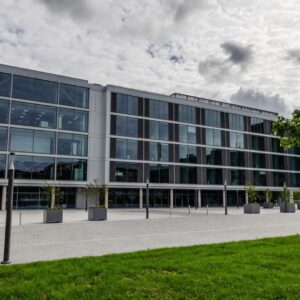
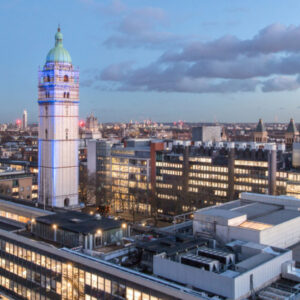
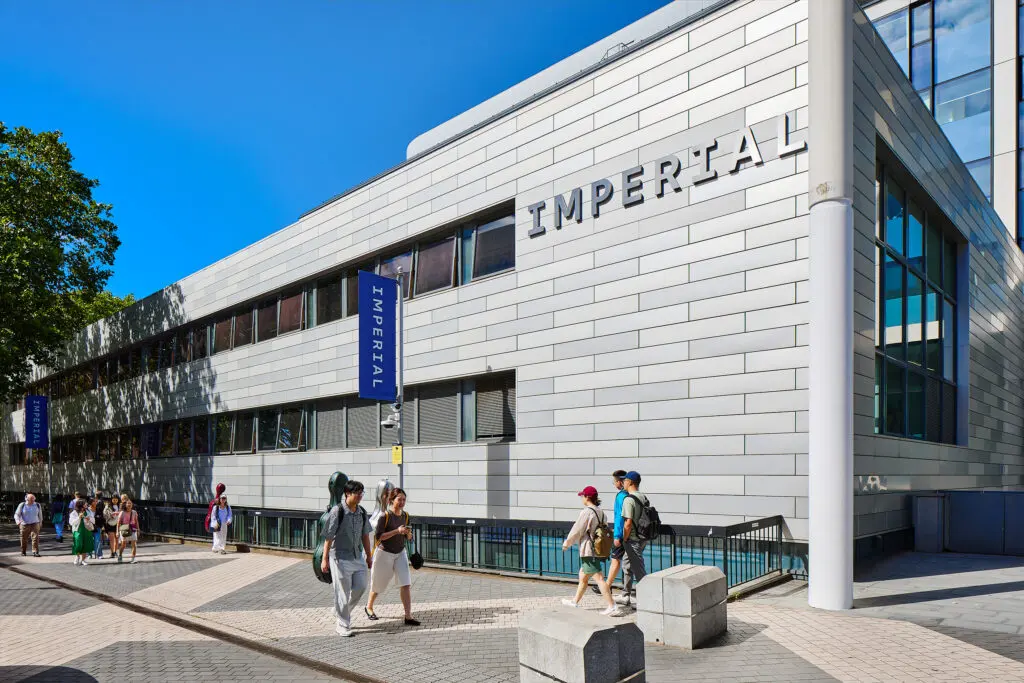
Imperial Business School is located in the heart of a global finance and technology capital.
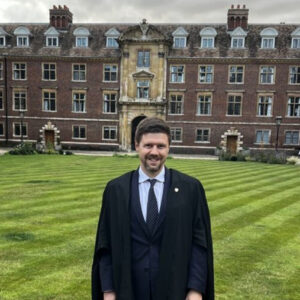
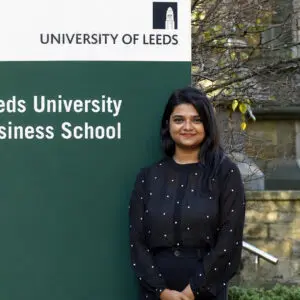
Jack Blyzinskyj spent his early twenties in a swimming pool and then in the fast lane of Silicon Valley. Komal Bapna worked as a growth manager inside India’s first digital payments company. Both credit Imperial Business School’s MBA with helping them transform their career.
For these two alumni, finishing with a prestigious credential was merely one benefit of the MBA. As they came to see, so much of value was in other aspects of their experience, from Imperial’s proximity to technology to its position in the heart a finance capital.
WHERE SCIENCE MEETS THE BALANCE SHEET
Blyzinskyj’s path to Imperial took him to a Series A start-up called CrowdStrike, its 2019 IPO, and then Google, where he managed growth. Working on the edges of venture capital, he realized he didn’t know enough about the financial side of the businesses he was helping build. During his research into top MBA programs, Imperial stood out.
“I wanted a school with a very high bar for tech. I had the commercial aspect but not the technical aspect,” he says. Imperial, a world-leading STEMB institution, promised “technical chops” alongside a finance-focused MBA.
Some of Blyzinskyj’s favorite modules blended entrepreneurship with the university’s science and engineering base. “A lot of the electives we did had crossover, like AI Ventures and the Entrepreneurial Journey,” he says. “For example, they pair you with students in thermodynamics, in physics. They’re usually at a point in their PhD where they have some sort of product they’re ready to commercialize. That was a dry run for me.”
A CITY FOR THE JOB HUNT
Komal Bapna, an electronics engineer by training, was drawn to Imperial for similar reasons. She put a premium on a strong STEMB background. Imperial’s location also played a big role in her choice. During a solo trip to the UK in 2015, Bapna was enthralled. “I felt like I just fell in love with London,” she says.
As her knowledge of banking working for the Indian Airtel Payments Bank grew, her reasons for wanting to be in London did too. “I realized that’s where all the action is,” she says, noting companies such as Revolut – an example of the city’s thriving fintech scene.
Blyzinskyj had a similar realization, having seen how much an international network matters. “A lot of friends took American MBAs and a lot of their network lives in the US,” he says. “When you get to staging multi-million and billion-dollar industries, the world stage becomes crucial.”
SMALL COHORT, WIDE NETWORK
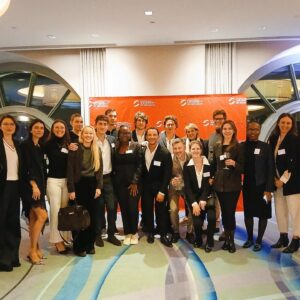
Imperial’s Full-Time MBA draws about 75 students from roughly 30 countries each year, a fraction of the size of some rival programs. For Bapna, this turned out to be a big plus. “One thing I did not consider is how much a small cohort is important to my journey,” she says. Within two weeks of induction, she could confidently say she knew 30 people – and she wasn’t afraid to approach classmates. “A smaller cohort can make you feel less intimidated even though the university is large,” she says.
That scale also enabled both students to shape the program around their own goals. Imperial’s MBA offers more than 40 electives, and Bapna used hers less for technical polish than for something more personal: coaching on workplace culture. “I needed someone to sound my ideas by,” she says. “I wanted coaching on ‘how do I blend into different cultures; how do I talk slowly; what is the right way to approach someone when I’m asking for a referral?’”
Her six-month entrepreneurship module turned into much more than a classroom exercise. Her team built a real business case: a blockchain tokenization platform aimed at letting individual investors own a stake in large real estate projects. “We actually registered a company. The founder is actively pursuing that,” she says. Unsurprisingly, her team won the module’s prize round. “The whole experience of pitching on a stage in front of a hundred people, how you pitch, the feedback, it teaches you a lot about different working styles,” she says.
BEYOND THE CLASSROOM & LONDON
Blyzinskyj also appreciates how both his studies and extracurriculars were grounded in real-world experience. Unlike MBA programs still using decades-old examples, Imperial brought in recent case studies from companies such as OpenAI, Revolut, Bain and McKinsey.
A trip to Kenya during Imperial’s Global Experience Week reframed how he thought about innovation. “The tech ecosystem is probably best in Nairobi in all of Africa,” he says. There, he encountered a much more pragmatic approach to invention compared to what he’d seen at home. “In the Bay Area, a lot of the things we invent we don’t necessarily need,” he says.
Outside the classroom, he gained experience in fundraising for charity. Blyzinskyj organized a channel swim to raise money for Ukraine. “Imperial helped me get in front of charitable organizations and corporate entities – I raised about a quarter million.”
FROM CLASSROOM TO CAREER
Both graduates say Imperial’s career support was pivotal. Blyzinskyj describes his career consultant’s role early on as less tactical than existential. “It was kind of like having a shaman for the first three months,” he says. Later, the conversation turned to resumes and contacts, many for jobs that, he notes, “aren’t necessarily listed publicly.”
That opened a new door. “Initially, I never really considered venture capital as a serious option for myself,” he says. “The people I had access to, the VC market somewhat opened up to me and became accessible.”
Meanwhile, Bapna’s MBA helped her land roles at Capital One and now Aviva – “both directly and indirectly because of Imperial,” she says. She credits the program with preparing her for corporate cultures she hadn’t encountered in India, helping her “be better at communication and understand the lingo.”
While their stories are unique, these two alumni are representative of the pivots made by a majority of Imperial students. Among its Full-Time MBA Class of 2025, within the first six months, 58% changed industries, 72% changed work locations and 40% saw their salary increase.
For Blyzinskyj and Bapna, those numbers have translated into two deliberate career reinventions – one into venture capital, the other into two multinational financial firms. But Imperial has also imparted something less tangible, says Blyzinskyj.
“A lot of degrees these days, especially in the U.S., are very ‘yes or no.’ There’s a very specific right answer.” He contrasts that with the experience at Imperial, which he says leaves more room for ambiguity, similar to working in the real world. “Life is much more conversational.”