What’s A WHU MBA Worth? Alumni On Building Careers And Lives In Germany
Author: Kritsty Bleizeffer, Rankings Editor at Poets&Quants
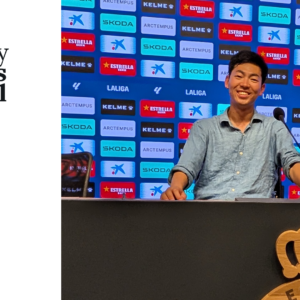
King Yuwono built his early career assessing risk in Southeast Asia’s financial sector. He evaluated businesses and credit as a banking relationship manager in Indonesia, tracked financial crime in Malaysia, and managed compliance across MoneyGram’s Southeast Asia and Oceania operations as the regional compliance officer.
When considering an MBA, his risk assessment became much more personal. What would it actually mean to step away from a successful career, move to Europe, and build a new career in a country where he had no connections or knowledge of the local job market – or even basic business norms?
“I knew that if I wanted to stay in Europe after graduation, the MBA couldn’t just be about studying,” says Yuwono, Class of 2025 MBA from WHU – Otto Beisheim School of Management in Germany.
“I would have to build a life and a professional network here as well.”
IT’S NOT ABOUT ‘ANOTHER QUALIFICATION’
Yuwono’s calculation gets to the heart of the MBA investment for international students: What does a year away from work, tuition, and a move across borders actually cost?
And what does it make possible?
For international graduates trying to enter a tightening job market, an MBA’s value can extend well beyond the basic ROI math. Classmates and alumni can help decode employers, sharpen a job search, make introductions, and show candidates how to put experience earned in another country to work in Germany.
“For me, the MBA wasn’t about getting another qualification. It was about deliberately putting myself into a situation where I would have to learn, adapt and rethink what I wanted to do next,” he says.
WHY GERMANY? WHY WHU?
In evaluating MBA programs, Yuwono wanted an international reset. He needed to understand how business works in Europe and test himself in a completely different environment. Germany put him inside one of Europe’s largest economies, while WHU offered a practical, entrepreneurial business education, close ties to the German business community, and a small, international cohort.
“I didn’t want to be one person in a class of hundreds where you could remain anonymous,” says Yuwono, now a risk management consultant at Capco in Frankfurt.
“My classmates came from very different industries, countries and professional backgrounds. You could have one conversation about investment banking, another about technology or entrepreneurship, and another about a completely different market.”
WHU’s full-time MBA is a 12-month, English-language program based in Düsseldorf. A typical cohort has just 40 to 50 students, about 80% of them international, with an average of five years of professional experience.
MBA classmate Victor Tuitoek faced a similar calculation. In Kenya, he was an engineer working on the power and energy systems behind telecommunications and digital infrastructure. He coordinated subcontractors, worked with customers, prepared commercial proposals, and made decisions involving costs and operational trade-offs. What he wanted was a stronger grounding in finance, strategy, and leadership.
WHU offered an “in” to Germany’s highly concentrated engineering, energy, manufacturing, and infrastructure businesses. Its small MBA cohort and one-year format meant he could make real connections with less time away from work than the two-year model.
“If I was going to invest in an MBA specifically to build a career in Europe, I wanted a school with a strong local network rather than choosing solely on global rankings,” says Tuitoek, who now lives in Offenbach, Germany, and works as a Data Centre Engineering Operations Engineer.
WHU’S TRIPLE ‘MS’ FOR CAREER PREP
To connect its MBAs to the German job market, WHU’s MBA Career Center uses a “TripleM” roadmap – “Me, Market, and Match.” Students work through what they want from their careers, what employers are looking for, and where the two line up.
For Tuitoek, that meant figuring out how his engineering experience fit into project and business leadership. He explored roles in everything from energy to sustainability to mobility as well as more traditional MBA paths.
The “Me” portion pushed him to recognize what already distinguished him was his experience delivering energy and infrastructure projects.
“The MBA added business skills, but it didn’t erase that experience,” he says.
“Market” brought those ambitions up against employers’ requirements for German language skills, industry knowledge, and specialization. It also helped him look beyond jobs that were popular among classmates to those where he could make a stronger case.
The biggest lesson came with “Match.”
“I gradually realized my strongest opportunities weren’t necessarily where I tried to present myself as a completely transformed generalist,” Tuitoek says. “They were roles where I could combine my technical background with the broader management perspective I had developed during the MBA.”
Working with data centers brought together electrical infrastructure, energy, cooling, reliability, and complex operations, areas he already understood. His MBA gave him a broader perspective on the financial and organizational decisions surrounding them.
WHEN THE MARKET GETS TOUGH, THE TOUGH GET NETWORKING
For international students, breaking into the German job market takes more than firing off applications — even polished ones backed by a WHU MBA. That’s where one of the enduring advantages of the full-time MBA still shines.
Even as AI makes knowledge and technical skills easier to acquire, even as junior-level roles continue to evolve, the ROI of the MBA is even more reliant on the all-important MBA network.
WHU’S network includes more than 7,500 members of In Praxi, the school’s alumni association with 35 regional chapters around the world. Roughly 90% of WHU students join.
WHU’s Class of 2026 average post-MBA salary is €83,304, excluding bonuses, a 66% increase over pre-MBA pay. Some 63% changed sectors, 47% changed job functions, and 56% changed locations. Sixteen percent made all three changes.
Those kinds of transitions rarely result from a single introduction.
“Networking was very important, though I think it helps to be precise about what that means,” Tuitoek says. His current job did not come from one magical conversation where someone handed him an opportunity. The network value accumulated over time through conversations with classmates, alumni and professionals in industries he was considering.
“Those conversations provide information that you cannot get from a job description,” he says. “A network becomes valuable when relationships continue after the initial conversation, rather than when every interaction is transactional.”
Yuwono agrees. One classmate might know a recruiter, another might have worked at a bank he was considering, while someone else could explain an unfamiliar industry. Alumni were particularly helpful because many had already navigated the same transition.
“Sometimes the value of a network only becomes visible years later,” Tuitoek says, “because the people you studied with are now spread across companies and countries around the world.”
OFF THE SPREADSHEET ROI
Of course, the ROI spreadsheet still matters. While a European MBA is far cheaper than most U.S. programs, WHU’s €49,500 is still a hefty investment. A year away from work makes the opportunity cost even higher.
Tuitoek received a WHU scholarship, but knew tuition was only part of his investment. There were relocation and living expenses, along with the salary he gave up to study full time.
“An MBA is too expensive to pretend that financial return is irrelevant,” he says.
He measures the decision over a longer horizon, asking how it might change the scope of his career over five, 10, or 20 years.
His WHU MBA year included immersive modules at NUS in Singapore and Nova School of Business and Economics in Portugal, a second-place team finish in WHU’s Strategy Challenge, and service on the MBA Sustainability Club Board. It also meant building friendships from scratch and learning to function in a country where he did not immediately understand how everything worked.
Yuwono describes his biggest return as having more options. His work now connects risk and financial services with technology and transformation, giving him more possible directions than he saw before the MBA.
He points to the contrast with Indonesia, where he could enter a professional setting knowing the rules. In Germany, even familiar tasks required new effort.
“The MBA was therefore not just an academic experience,” he says. “It was a personal experiment: Can I actually start again somewhere completely unfamiliar?”
“The answer turned out to be yes.”