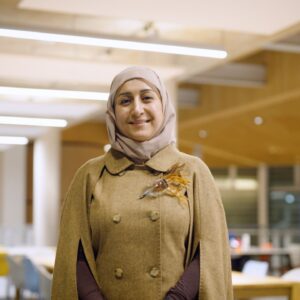
Why Two Students An Ocean Apart Both Chose Copenhagen
Author: Pola Lem, Executive Editor at Poets&Quants
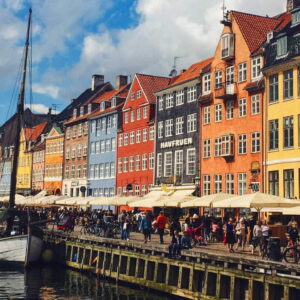
A hub for both renewable industries and pharmaceuticals, Copenhagen was ranked the world’s most livable city again this year. For a select group, Denmark’s capital city holds an even more important distinction: it is home to one of Europe’s top MBA programs, Copenhagen Business School.
Two students from across the Atlantic tell Poets&Quants about when they both felt the pull of Copenhagen – and how CBS’s MBA program gave them the skills to take their career to the next level.
FROM COLOMBIA TO COPENHAGEN
Colombia-based corporate lawyer Sofia Jaramillo Gaviria was four years into her career when she realized her legal training wasn’t enough to properly do her job. Her manager had just left to oversee a team in another country, leaving her covering a hefty load of the responsibilities.
She’d noticed that there were things her legal background didn’t explain. “So many times, I had to stop people just because I didn’t understand the logic of something,” she recalls. “That’s where I saw I have to keep up – if I’m going to continue in a corporation, the legal talk is not enough.” She realized she needed an MBA.
There were two things Gaviria was certain of: she wanted to be in Europe, in a context where the U.S. and Canada aren’t the main poles of influence; and, having come from Latin America, she also wanted to be in a country that is not Spanish speaking.
As a small country with “big companies”, Denmark had a lot to offer – especially around Copenhagen. In her area of expertise, the pharmaceutical industry, there were huge players such as Novo Nordisk and numerous smaller startups.
Gaviria knew she wanted a one-year program with a broader lens on business, as opposed to a program heavily focused on strategy or finance. Besides being “really well rounded”, CBS’s program had other upshots. For instance, the opportunity to do an internship – something that’s “really rare for a one-year MBA,” she says – and its strong focus on sustainability.
AUTUMN TO SPRING SEMESTERS
Classes began in October, with an “intense” first semester of back-to-back modules lasting roughly a couple weeks each. The coursework ramped up as the when days drew shorter. It became “really dark” in Denmark, she says, but friends and classes made the transition “super manageable.”
Just as she’d hoped, Gaviria was in the classroom hearing from directors at companies including Lego, Maersk, and Novo Nordisk. “Since it’s so small, everyone knows each other, so you can really access those important people.”
She found there were perks to Northern Europe’s cold winter, too. Roughly half her cohort went on a ski trip that winter. Some months later, they undertook an annual rite of passage, the capstone to her Leadership Discovery Process class: camping out in the Swedish woods without any tents or equipment.
“It’s always a secret for the upcoming cohort. It’s a really good way to put your leadership skills under review because you’re under pressure, uncomfortable, living in the woods,” she says. “You don’t expect a university to throw you into this environment.”
Unlike your typical survivalist camping trip, the trip included feedback from classmates at the end. Gaviria’s takeaway was that she could be less “sweet” and more assertive – something she’s taken with her into her interactions both on the program and on the job hunt.
The leadership course has been a highlight of her MBA: “It made me more aware of myself as a leader, including how I naturally approach leadership and the assumptions I have about what good leadership looks like.”
BEYOND THE MBA
Gaviria still needs to finish her internship and a thesis before graduating. In the meantime, she’s waiting to hear back on a couple job applications. She says she’s currently looking to stay in her industry – and in Copenhagen, a place where she’s developed both a professional network and close friends.
But Gaviria’s adamant she wants to ultimately return home to Colombia in the longer term. “People that have the privilege to go abroad and learn from big companies do have the responsibility of giving back to our countries,” she believes.
Having gone through CBS, she feels she’s got the skills and experience to contribute. “In Colombia we think of sustainability as the environment – we have so much teaching to do in companies. The company has a responsibility that goes beyond the environment.”

NYC TO NORDIC RENEWABLES CAPITAL
A year before Gaviria’s CBS journey began, Gregory Heeren felt the pull of Copenhagen from New York City. At the time, he was working in sustainability consulting, primarily advising private equity investors on ESG. He had a creeping realization: his work on carbon accounting touched on so many aspects of business beyond sustainability.
“Managing and measuring carbon emissions had so much to do with a company’s growth trajectory, where it was opening offices, how and where headcount was expanding,” he says.
Heeren noticed that his recommendations to reduce emissions in a particular area, which started with a conversation with a chief sustainability officer, often necessitated more input. “Very quickly that would involve other people in business [needed to make] strategic or financial decisions or about where business was heading.”
Increasingly, he felt his skillset didn’t cut it. “To contribute meaningfully, I could provide perspective and analysis of their footprint, but I didn’t necessarily understand tradeoffs being made elsewhere in the business.”
A CHANGE OF SCENE
Heeren also knew he wanted a change of scene. He’d been thinking about a move to Europe; Copenhagen stood out as a leader in sustainability and related industries. On a trip there, he felt an instant connection. “It was beautiful, peaceful, the people I met were really friendly. Biking around the city, I could picture me and my wife living here and for the longer term.”
And of course, there was Copenhagen Business School. Aside from its reputation as a “fantastic top-tier institution” with “very impressive” professors, it had deep connections within industry, making him “optimistic” he’d be able to build a career in the city after graduating.
There were more good surprises in store when he began the program. A small international cohort gave him the opportunity to “really connect” with the whole class.
In his strategy project, in which students are embedded in a company to solve a challenge, he was also able to connect directly with industry. Heeren was based at the Danish renewable company European Energy, where he surveyed climate risks. Outside of learning about the sector, he also got what he calls a “practical introduction” to working in Denmark. “I know I can work here because I’ve done it before,” he recalls thinking.
The CBS careers support team also played a part as Heeren approached networking in an unfamiliar culture. “It was especially helpful when I was trying to build a network here and figuring out who can I talk to how can I approach those conversations [and] what’s a natural way to do that?”

THE POST-MBA ‘DREAM JOB’
Not long after his graduation in 2025, Heeren began what he calls an “ideal” job as executive advisor to the chief investment officer at Impact Fund Denmark – the country’s development finance institution.
“I can’t really imagine a better role to do after an MBA,” he says. “It truly does involve working on projects with our ops team and our tech team and our investment team. …It’s a role where there’s a huge benefit to knowing how all those functions think, what they’re concerned about, what their reference points are.”
While he ultimately found the job on his own, he said it “certainly helped” that he’d gone to CBS, which is very well known and respected in the company. Looking back on his journey, Heeren advises candidates to think deeply about what they want out of the MBA.
“You get the most out of it when you really try to fully take advantage of it, whatever that means to you,” he says. “It’s about getting into the driver’s seat and steering your MBA in the direction you want it to go. Ultimately, you’re doing this for a reason. Nobody just falls into an MBA.”