ROI In The MBA Has Changed – Here’s How
Author: Pola Lem, Executive Editor at Poets&Quants
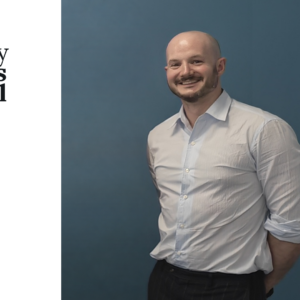
In his high-viz vest, drinking coffee from a paper cup during the night shift at an Amazon warehouse, George Peters doesn’t immediately have the look of a recent MBA graduate.
On closer inspection though, the picture comes together. He’s about to go back to the floor, where he directs 200 to 300 people per shift, including a handful of managers.
“The MBA was a nice bridge from a military to civilian role,” says Peters, in what feels like an understatement.
He’s come a long way from his home and from his previous career in the British navy. Paradoxically, his story is both unique and typical for a University of Bath School of Management graduate. Peters is a prime example of a triple pivot: changing geography, job function and industry out of the MBA. He also illustrates the increasingly complex meaning of ROI – not just money earned, but a career path changed by this experience.
THE TRIPLE PIVOT
Peters’s pre-MBA CV sounds like something out of a Bond film. Originally from Exeter, an hour and a half from Bath, he joined the navy at 19 to be an officer, began his career working on mine hunters, became an assistant chief of staff, did a tour in the Middle East in counterterrorism and narcotics, later joining naval intelligence.
After five years of “travel and tumultuous times,” he knew he wanted a quieter job – and to settle down with his American partner. The MBA seemed like an ideal way to broaden his options.
“Defence would have been an easier pathway, but I knew I was going over to California, so I wanted to buy myself the most options available and give myself that stamp on a resume,” he says. “It’s rare in life we get the chance to reassess, check where we’re at, have thought-provoking conversations.”
Following an initial look at U.S. programs, Peters did the math and opted for a UK-based program. Bath was conveniently close to home, it was a small cohort – under 50 students vs a class of several hundred at other institutions – and he felt he immediately “gelled” with the staff there, who reassured him he was in the right place. Local to the area and a former military member, Peters didn’t fit the ‘typical’ pre-MBA mold – but in a class full of people from very different backgrounds, there was no such thing.

FRIENDS FROM DIFFERENT WALKS
“I think I was the only white British male in that class,” he says. “They try to spread that diversity along with different professional backgrounds quite evenly among the group.” On his consulting project, teammates included a property manager from Zimbabwe, a consultant from Japan and a nonprofit worker from Canada. Next year, he’s attending the wedding of a friend in New Delhi.
He credits another friend – an Excel whiz named Kim, from Thailand – for helping him in data analytics, a subject he’d never tackled before. Perhaps even more crucially, interactions like this one have taught him to look at problems through another lens.
“The military trains you to think a certain way [whereas] consultants look at problems slightly differently. …The military mindset is more simplistic. There’s A to B assessing risk, outcome, priority. Versus for consultant, other things come into play: risk mitigation, cost,” or just that “the CEO wants to hear something different,” he says.
That stuck with him. “Now, when I approach a problem in the current job, I’ll take a second and reassess, and ask, ‘What would Kim think about this?’”
FINDING THE POST-MBA ROLE
Another friend – who the university introduced Peters to – helped set him on the current path. A 2022 alumnus and also an ex-British army officer who’d gone on to work for Amazon, he showed Peters a blueprint for how his career might progress and made initial introductions with the company.
Ahead of his interviews, Peters worked with the careers team to “finetune” his narrative of leadership experience. “There was coaching and mentoring from the start,” he notes. “We were assigned a mentor individually. I’d never done anything like that.” The preparation helped land him his first post-MBA job.
These days, Peters is constantly putting his knowledge from Bath to use. “Amazon is always chasing after cost and quality – and a huge amount of data analytics goes on.” Having had “little to no” exposure to this in the Royal Navy, he has become fluent in pivot tables and charting regression.
He credits Bath with equipping him with an invaluable new skillset. Beyond the “salary bump,” the MBA gave him concrete new skills, confidence, and “that recognition that you’re able to get on the resume that you do have the aptitude to talk through strategy, also good exposure to international communication.”

A RADICAL CHANGE IN DIRECTION
Ishita Jain’s MBA journey bears little resemblance to Peters’s. But they share one important characteristic: Jain also knew she wanted a radical change in direction.
Born and raised in India, she did a master’s degree in Chicago before working for three and a half years as a dietician in the U.S. She felt she’d hit a glass ceiling. She wanted to spin out her specialism to start her own consultancy.
Like Peters, she looked for programs in the U.S. before considering the UK. In Jain’s case, she received one U.S.-based offer, but visa restrictions proved too great a hurdle. “Fortunately, I got an offer from Bath as well,” she says. “When the Trump situation happened, it was a sign for me to leave the US and try out a new country. That’s when I did a lot more in-depth research about the course and Bath as a city.”
A scholarship helped tip the scales further in Bath’s favor. She was also drawn to the small cohort – in her case, 37 students – and the Multi-Project Suite, a replacement for the traditional dissertation on Bath’s full-time MBA in which students grapple with real-life problems faced by industry partners.
THE CONSULTING PROJECT
There are four projects in total: a social action project working with an NGO, a consulting and change management project, an entrepreneurship project, and a capstone consolidating project. For the final one, Jain and her group worked with IBM to help launch a product and devise a branding strategy.
She credits the experience with “completely” changing her career direction. “I’ve shifted into marketing and strategic consulting – and I realized from the projects that this is something I’m actually good at.”
“I was under the impression I was only good at operations since I knew how that works in a hospital. But slowly when I learned marketing finance, I understood that from previous work experience I can put my skills into use in other core modules.”
The other big formative part of the experience for her came as a surprise.
“We have these personality development sessions where we just play games – until the end of the session, when we realize it’s not just games but also to understand how to improve your communications and teambuilding skills.”
She says the exercises made her more assertive and more confident. “I come from a healthcare background where you’re taught to be so polite and so soft. It was a whole pivot for me because as a consultant you have to be very upfront, speaking in a very confident way – you have conversations where disagreements have to happen to develop. I’ve learned how to get out of that soft shell.”
As her next step, Jain is looking for a role in a pharmaceutical or medtech company in Europe or the UK. “I want to take my healthcare expertise…into a totally different market.”
Among the US and UK business schools that Ran researched, Bath won out for its practicality, with courses in data analytics and accounting.

FROM CHINA TO BATH
Brant Ran’s path to Bath started with a familiar feeling – hitting a career plateau. After five or six years as an investment manager at HSBC in China with constant exposure to global markets, he began eyeing a bigger stage.
Ran resigned from his post in 2019, a few years after he began looking into MBA programs abroad. “Some people in China treat the MBA as a social environment,” he says. “I agree to some extent, but we still need a knowledge or skill boost.”
Among the U.S. and UK business schools that Ran researched, Bath won out for its practicality, with courses in data analytics and accounting; the city, which Ran hadn’t seen until his move for business school, turned out ideal. “I’d stay in Bath forever if I could,” he says. “It’s a beautiful city.”
Ran’s classes began in September 2020, as Covid-19 cases spiked. In his second semester, only around a third of teaching happened in person, and the class missed out on a graduation gala at the historic Roman Baths. But he says the constraints had unexpected upshots: the pandemic forced classmates to find their own ways to collaborate. They met in parks and at the pub, forming an unusually tight-knit group.
The most valuable parts of the course, he says, were business analytics and the final group project – Bath’s MBA has no dissertation but culminates in a significant consulting project. Ran’s group of six, from Thailand, Laos, India and China, chose to study a banking group that happened to be a client he was auditing at work. The cultural mix reshaped how he thought about disagreement.
“We didn’t argue,” he says of the group’s process. “It’s like brainstorming.” One lesson from that period has stayed with him: “The most critical thing is not how you say something, it’s how people react.”
A separate entrepreneurship exercise – a mock medical-testing start-up – imparted another lesson. Trained in finance, Ran instinctively began from numbers. Working alongside entrepreneurs showed him a different approach. “What are we trying to achieve” became a more useful starting point than a spreadsheet, he says. He still applies that instinct at work today.
LONG-TERM DIVIDENDS
The MBA’s longer-term dividends, he says, are less about any single skill than a shift in mindset. Watching classmates, former teachers among them, reroute their careers reinforced a simple principle: never stay locked into one way of thinking. “I tended to be quite stubborn sometimes before the MBA,” he admits.
Despite years at a nominally international bank, he says he wasn’t truly in an “international environment” before Bath. The MBA left him able to “deal with most people around the world” in a more global, business-minded way.
After Bath, Ran joined Deloitte, initially as an auditor, a route that also enabled him to qualify as a chartered accountant. He now works in regulatory compliance and finance advisory – specialised territory that echoes the focused work he did in China.
A decade ago, on a business trip to HSBC’s offices in Canary Wharf, he couldn’t have imagined working in the UK. “There was no way I could think I could work in this country,” he says. “But you never know. You just do what you can do and embrace the challenge, the change.”