Why This Wall Street Banker Traded New York For Monaco – And Never Looked Back
Author: Marc Ethier, Editor-in-Chief at Poets&Quants
He expected Monaco to feel like a smaller New York. Instead, Ross Kaplan learned how to lead across cultures
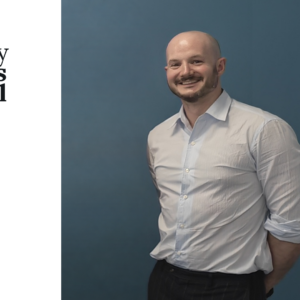
Ross Kaplan had already put in eight or nine years at British and American banks and investment firms by the time he decided to go back to school. He was 30, he had paid his own way, and he wasn’t interested in losing two years of income to sit through case studies he’d already lived. What he wanted was somewhere he had no roots – a financial hub he could parachute into and build from scratch.
That search led him to the International University of Monaco.
A DIFFERENT KIND OF FINANCIAL CENTER
Kaplan had a picture in his head before he arrived: Monaco as a scaled-down New York, a dense little version of the trading floors he already knew. He was wrong, and he says that turned out to be the point.
“I kind of expected that Monaco would be a miniature version of New York when it’s really not,” Kaplan says. “It’s actually more like Connecticut – it’s focused on wealth management, and then some of the byproducts of wealth management, like the yachting industry and the luxury industry.”
That narrower focus didn’t bother him. The IUM program was only 10 months long, which mattered to a self-funded student who’d already banked nearly a decade of real-world finance experience. He wasn’t looking for theory. He wanted something applied.
“It seemed more mathematical and real world as opposed to kind of theoretical, which is the vibe that I got from some of the U.S. universities,” Kaplan says.
LEARNING TO WORK OUTSIDE THE UMBRELLA
What Kaplan didn’t fully anticipate was how much the school’s mix of more than 80 nationalities would reshape the way he operates as a manager. Today, he leads international teams at Amazon, work he traces directly back to his time in Monaco.
The distinction he draws is between diversity of people and diversity of culture. American banking, he says, can be diverse in its workforce while still operating under one dominant cultural code. Monaco was different.
“You see very different cultures, and it teaches you how to ultimately work with people from very, very different backgrounds on a common goal, which is a very important skill set down the road,” Kaplan says.
That lesson sometimes arrived the hard way. Kaplan recalls moments when something he intended as helpful, and would have read as helpful in an American context, landed badly with a classmate from a different background.
“I had a few moments where maybe I did something that was considered a little bit innocuous, or even helpful – so maybe in the U.S. it would be considered helpful – and then I got kind of negative feedback from somebody,” he says.
Comparing notes with peers who went through more homogeneous MBA programs, Kaplan says the difference shows up in how people grow. “I feel like they certainly learned a lot, but they kind of grew on what they already had, as opposed to expanding horizontally,” he says. “I think Monaco provided a good platform for horizontal growth, and then you can grow vertically on that new horizon.”
PROXIMITY TO THE TOP OF THE INDUSTRY
Monaco’s compact size cuts both ways, and for Kaplan, it worked in his favor. Being in a small, wealth-dense principality meant direct access to senior figures who would have been much harder to reach in New York or London. He met with leadership from Goldman Sachs and other major firms during his time there, along with two mentors he describes as a former chief investment officer at HSBC Monaco and the president of a hedge fund.
What stayed with him wasn’t a specific deal or metric. It was demeanor.
“They talk slower. They say less, but their words have more weight,” Kaplan says of the senior bankers he observed at industry events. “I got a lot of exposure like that.”
A CAREER THAT LOOPED BACK TO THE U.S.
Kaplan didn’t end up staying in wealth management, and he didn’t stay in Europe, either. He shifted into technology and returned to the United States, where he has spent the past 11 years at Amazon. He pushes back on the assumption that an international MBA locks graduates into an international career path.
“I was in the U.S., worked in the U.S., went to Monaco, studied there, and then I got a job back in the U.S.,” he says. “A lot of people think you have to stay in Europe. I don’t think that’s true.”
What he says did stick, long after the specifics of any course faded, were the soft skills: reading a room, building consensus across people who see the world differently, and staying patient with what can look like inefficiency in cross-cultural collaboration.
HIS ADVICE FOR THE NEXT COHORT
For students weighing a smaller, hyper-international program like IUM against a larger school in a familiar market, Kaplan’s advice is practical rather than romantic.
“Come in with a plan, even if you change the plan later on,” he says. “Have an open mind and understand that there’s opportunities that you don’t currently understand. Embrace the difficulties and seemingly inefficiencies of dealing with people who are completely different from you.”
He adds a line he picked up along the way, one that has nothing to do with nationality and everything to do with survival in finance: “Rule number one in capitalism is not losing money. It’s not making money. It’s not losing it.”